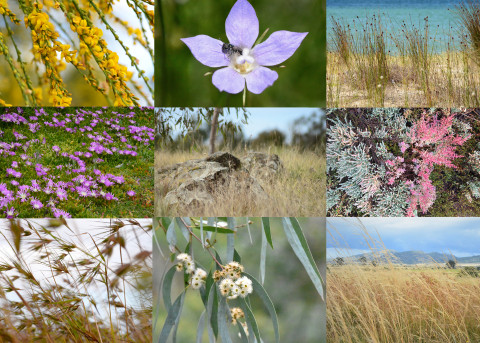
Wyndham is home to a range of diverse ecosystems such as coastal saltmarsh, plains grasslands, wetlands and more. These landscapes provide habitat for rare and endangered species, deliver important ecosystem services that make land more productive, and contribute to the region’s identity and resilience.
Protecting native vegetation is not just good environmental practice - it’s a legal requirement.
Native vegetation describes plants that are indigenous to Victoria and are protected under Federal, State, and local laws. This includes trees, shrubs, flowers, grasses, climbers, rushes and groundcover plants.
These plants can often be found in areas of native grassland, rural roadsides, bushland, farm paddocks, wetlands, creeks, rivers, and coastal areas.
Legal Requirements for Native Vegetation Removal
Native vegetation is protected under the Planning and Environment Act 1987. While the Department of Energy, Environment and Climate Action (DEECA) sets the rules, Wyndham City Council enforces them. If you’re planning to clear native vegetation, you may need a Planning Permit - even for activities like rock removal, stockpiling or boom spraying. Council assesses permits using DEECA’s guidelines, which aim to avoid, minimise, or offset vegetation loss. Unsure? Contact Council before starting work to avoid fines or restoration orders.
Removing, destroying, or lopping native vegetation (including spraying, burning, digging, rock removal, or stockpiling) may require a permit under Clause 52.17 of the Wyndham Planning Scheme. You’ll likely need a permit if:
• You plan to remove native vegetation or rocks on private or public land.
• Your property is within an Environmental Significance Overlay (ESO), Vegetation Protection Overlay (VPO), or Significant Landscape Overlay (SLO).
• Your property is part of a Conservation Area, Precinct Structure Plan, or the Western Grassland Reserve.
Always check with Council before undertaking any works, contact us on 1300 023 411 or email mail@wyndham.vic.gov.au. You can also visit our Planning Frequently Asked Questions.
Offsetting and Development Requirements
Under DEECA’s Guidelines for the Removal, Destruction or Lopping of Native Vegetation (2017), the approach is clear: first avoid removing native vegetation, then minimise any unavoidable impacts, and finally offset what cannot be avoided.
If removal is approved, you must offset the loss by purchasing biodiversity credits or completing approved restoration works. This ensures no net loss to biodiversity and compliance with the guidelines.
For subdivision and development proposals, you must:
- Retain and protect significant native vegetation.
- Comply with Precinct Structure Plans.
Protecting Native Vegetation in Wyndham
All Council works and projects follow the relevant state and federal environmental legislation. Council actively manages natural reserves across Wyndham by controlling invasive weeds, planting indigenous species, and restoring habitats to maintain healthy ecosystems for future generations.
Frequently Asked Questions (FAQs)
Does my property have an environmental overlay?
Go to VicPlan and search for your property by entering your address. It’s free and it shows if you have an overlay.
Do I need a permit to remove a dead tree?
Yes - if it’s a large standing dead tree (trunk >40cm diameter) or located in a protected overlay.
Can I clear vegetation for fire protection?
Yes, under the 10/30 rule, but only within 10m of a dwelling and 30m for fine fuels. Roadsides and protected areas are excluded.
Can I graze livestock on native vegetation?
Yes, however grazing can damage native plants. It should be minimised, especially during seed set periods.
Can I remove vegetation to build a fence?
Yes, but only to the minimum extent necessary. Roadside vegetation requires Council consent.
Can I remove a non-native tree?
In some circumstances non-native trees are protected. It’s important to always check with Council before starting works. See Council’s planning FAQ page.
What happens if I remove vegetation illegally?
You may face enforcement action, including restoration orders or fines.
Further Information Links
Wyndham City Council:
Wyndham Planning Scheme
Wyndham Biodiversity Policy
Replacing of Building a Fence next to Wyndham City Property
Wyndham Planning Frequently Asked Questions
Precinct Structure Plan
Department of Transport and Planning:
Environmental Significance Overlay (ESO)
Vegetation Protection Overlay (VPO)
Significant Landscape Overlay (SLO)
DEECA:
Conservation Area
Western Grassland Reserve
Guidelines for the Removal, Destruction or Lopping of Native Vegetation (2017)
Offsets for the Removal of Native Vegetation